
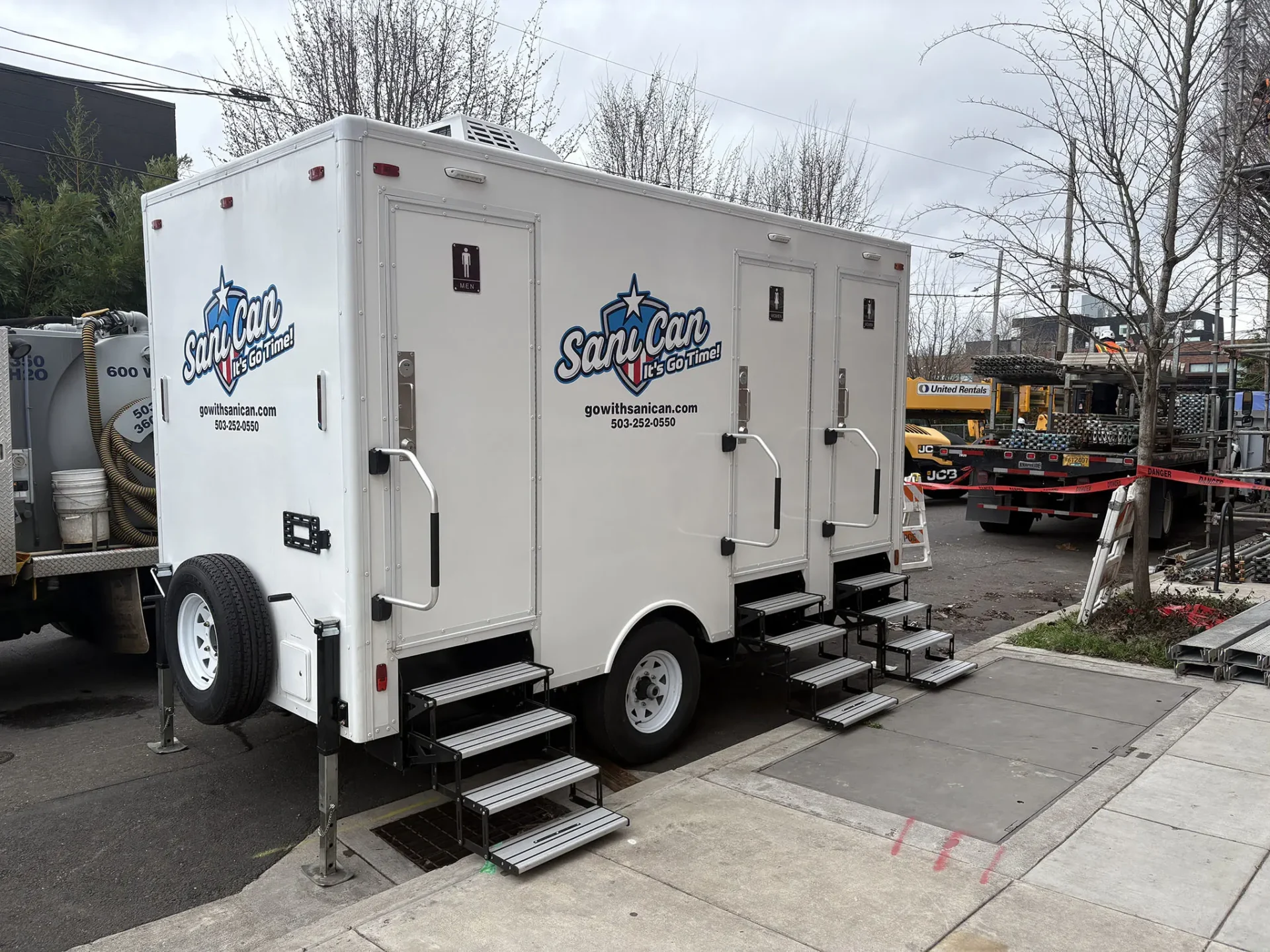
Restroom Trailers for Construction Sites
A cleaner, more comfortable solution for job sites that need more than standard units. Our restroom trailers provide a higher level of comfort, cleanliness, and professionalism for construction projects — and they help keep crews productive, reduce complaints, and support better job site conditions across the board. Built for the kind of build where the restroom shouldn’t be the daily friction point.
When to Use a Restroom Trailer
Standard portable restrooms are the right call for most jobsites. They’re durable, easy to relocate, and built for high-traffic use. But on certain projects, the standard unit doesn’t fit the brief — and the restroom becomes a daily issue instead of a non-issue. A trailer makes sense when your project hits any of these:
Long-term construction projects
15+ workers, or multi-shift operations
Remote or infrastructure-limited sites
Projects with supervisors or client visibility
Higher-standard or high-visibility builds
Built for Construction Sites
Our restroom trailers are staged and serviced specifically for active jobsites — not pulled off the wedding fleet at the last minute. What that means on the ground:
Improved crew satisfaction and morale
Fewer complaints and less downtime
Cleaner, more organized job sites
Support for compliance and site standards
A better experience for supervisors, inspectors, and visitors
Built for Comfort
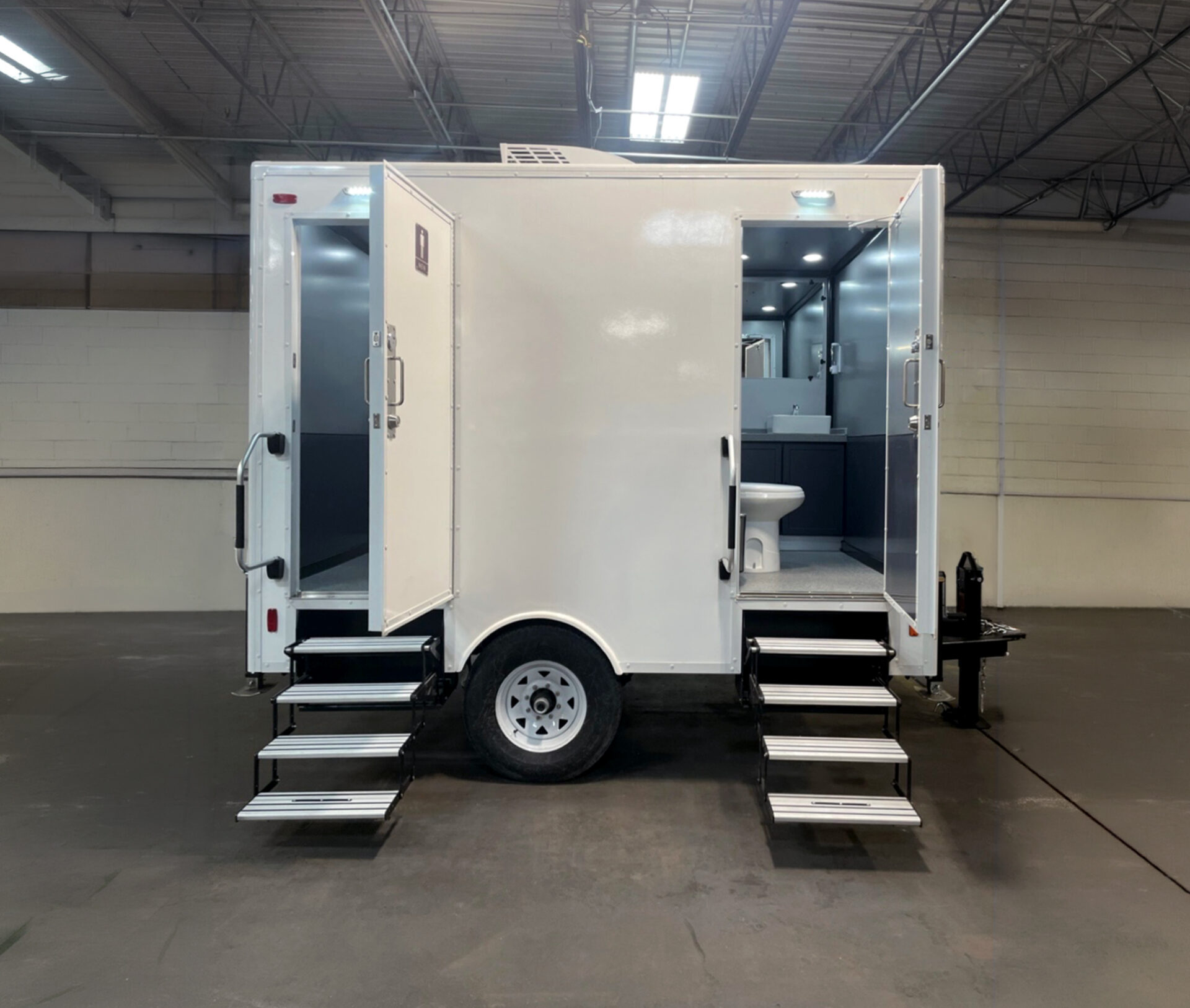
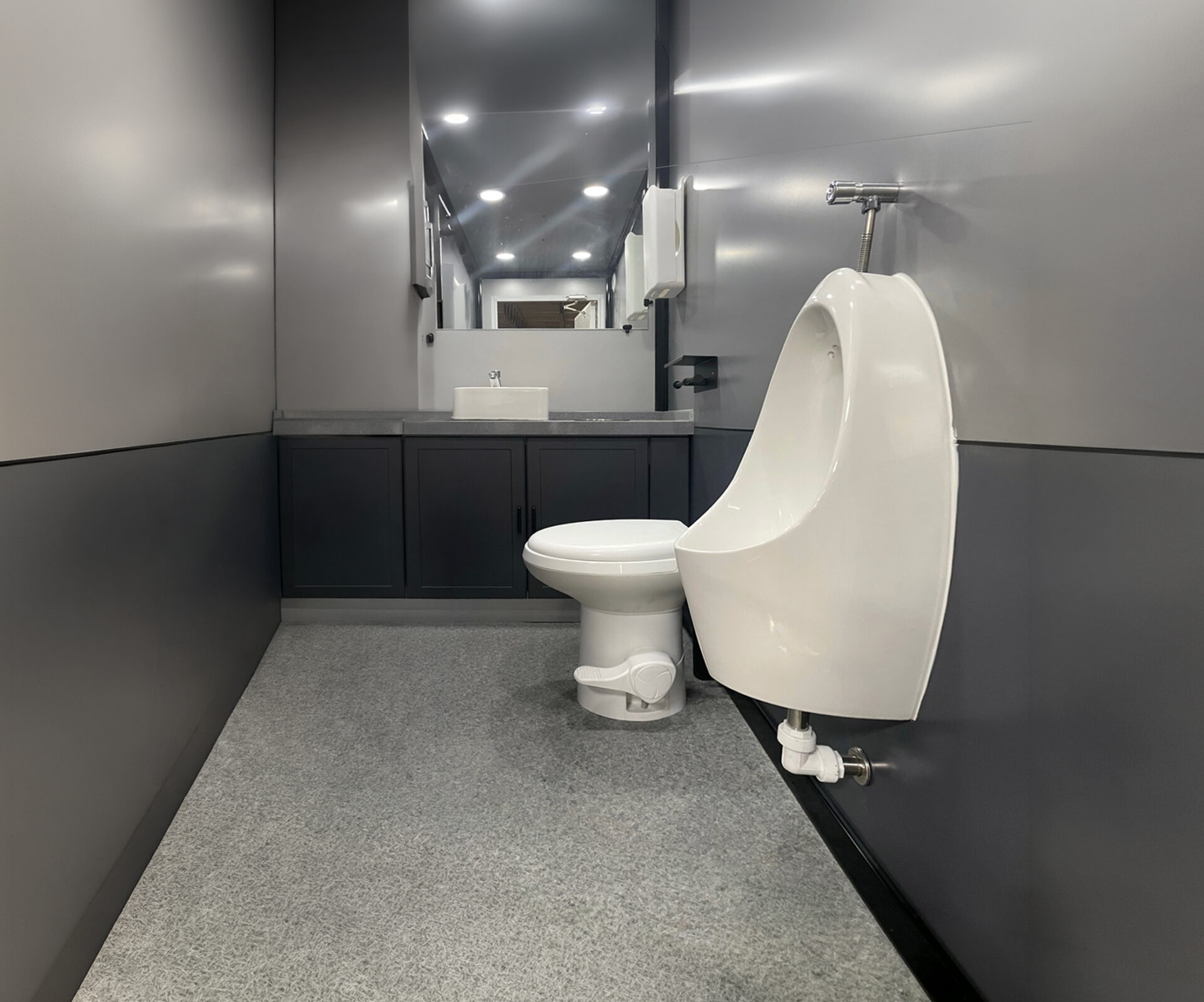
Inside, a restroom trailer is closer to an indoor bathroom than a porta-potty:
Flushing toilets with porcelain fixtures
Running water and sinks
Climate control — heating and cooling
Interior lighting and finished walls
Spacious, fully enclosed environment
Soap, paper towels, and full stocking
Crew Morale Is a Line Item
Here’s something we’ve heard from project managers more than once: the cost difference between a standard porta-potty setup and a restroom trailer is a rounding error against the real cost of an unhappy crew. On a multi-month build, the restroom is one of the few amenities your workers interact with every single day. A clean, climate-controlled trailer sends a clear message about how the project values the people building it.
That’s not a soft argument — it’s a retention argument. And in a tight labor market, retention is the budget.
When Trailers Make Financial Sense
Restroom trailers typically cost more than standard units upfront — but on the right project, they can reduce overall cost by cutting down on:
Crew complaints and disruptions
Time lost due to poor conditions
The need for additional units (one multi-stall trailer often replaces several standalone porta-potties)
Reputational risk on high-visibility sites
For larger or longer-term projects, the math tends to favor the trailer.
A Real-World Comparison
Picture a 4-month commercial build with a crew of 25 workers.
Option A — Standard units. You’d need multiple porta-potties spread across the site, with higher service frequency to keep them clean, and a steady stream of complaints from the crew about heat, smell, or wait times. Manageable, but it’s a daily tax on the project.
Option B — Restroom trailer. Fewer units overall, dramatically improved conditions, a better crew experience day-to-day, and a job site that looks and feels more organized to clients and inspectors.
Same crew, same project length. Different daily reality.
What Sets SaniCan Apart
Renting a trailer is only half the equation. The other half is the service behind it — and that’s where we’ve spent nearly 30 years getting better. Every service is built around clear, measurable standards:
Real-time service tracking for full visibility into when units are serviced
Documented service logs for accountability and compliance support
Consistent, scheduled maintenance — not reactive cleaning
A local team backed by a national network
Scalable support for projects of any size
Safety, Compliance, and OSHA
Restroom trailers count toward your OSHA 1926.51 toilet requirements the same way standard porta-potties do — and the multi-stall design often means a single trailer covers a larger crew than several standalone units. We’ll help you calculate the right unit mix for your crew size and project specs.
Beyond the regulatory minimum:
High cleanliness standards across every service visit
Service schedules that support site compliance, not just legal minimums
Reliable servicing that helps you avoid disruptions
A Simple Process, Start to Finish
No confusion. No delays. Just reliable service.
Step 1 — Request a quote and we’ll recommend the right trailer setup for your project
Step 2 — Schedule delivery to your job site
Step 3 — Receive consistent service and maintenance throughout the rental
Step 4 — Trailer picked up at project completion, on your schedule
What Affects Pricing
Every project is different. Here’s what we’ll ask about when you call for a quote:
Project duration
Location and delivery distance
Service frequency
Site requirements (power and water access)
Where We Deliver
Proudly serving NW Oregon and SW Washington from operational hubs in Portland, Sherwood, Hillsboro, and Molalla. We deliver to construction sites across the full Portland metro, the Willamette Valley, and Clark County. If your project is at the edge of our service map, call us — we can usually make it work with the right planning.
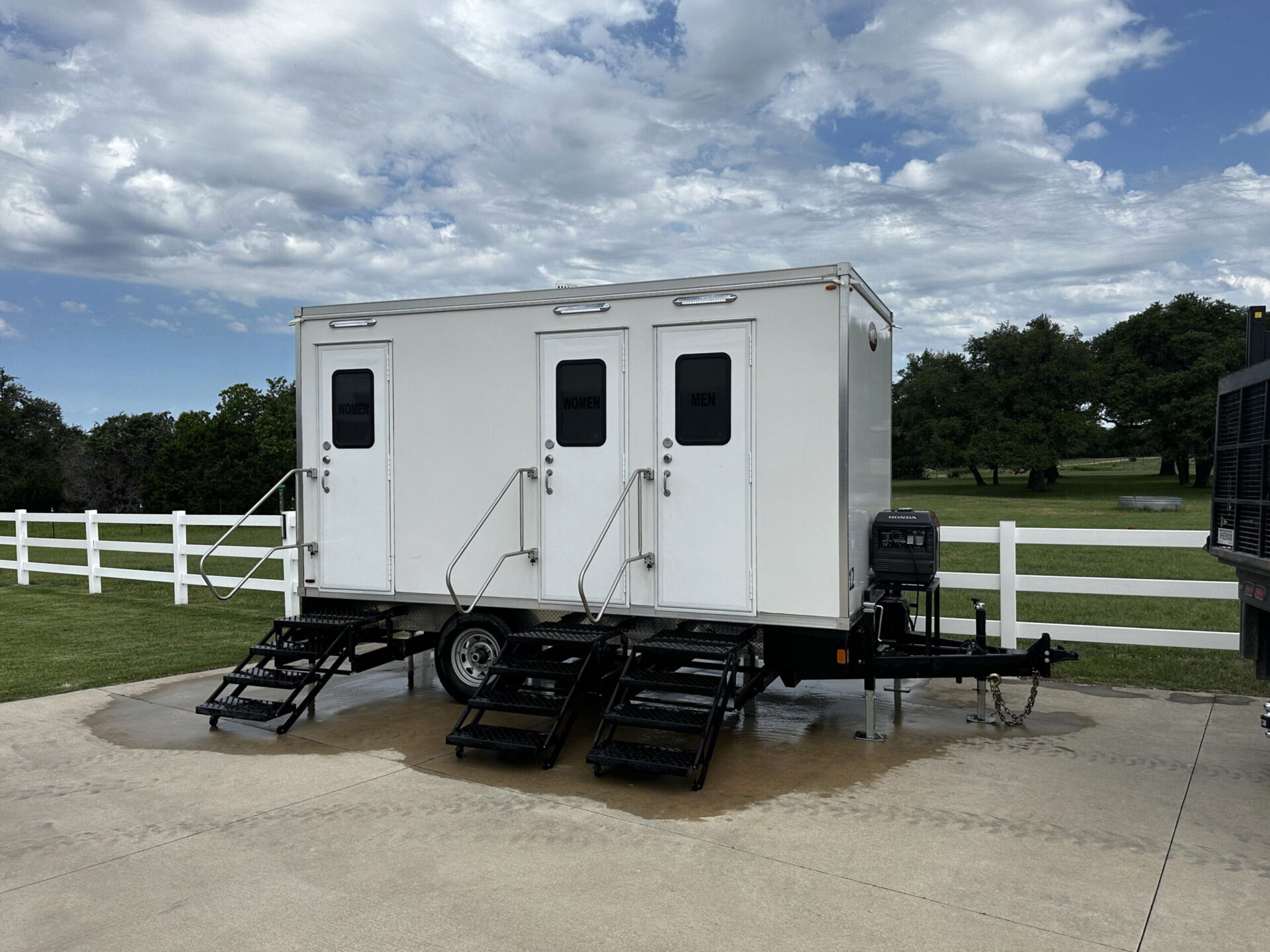
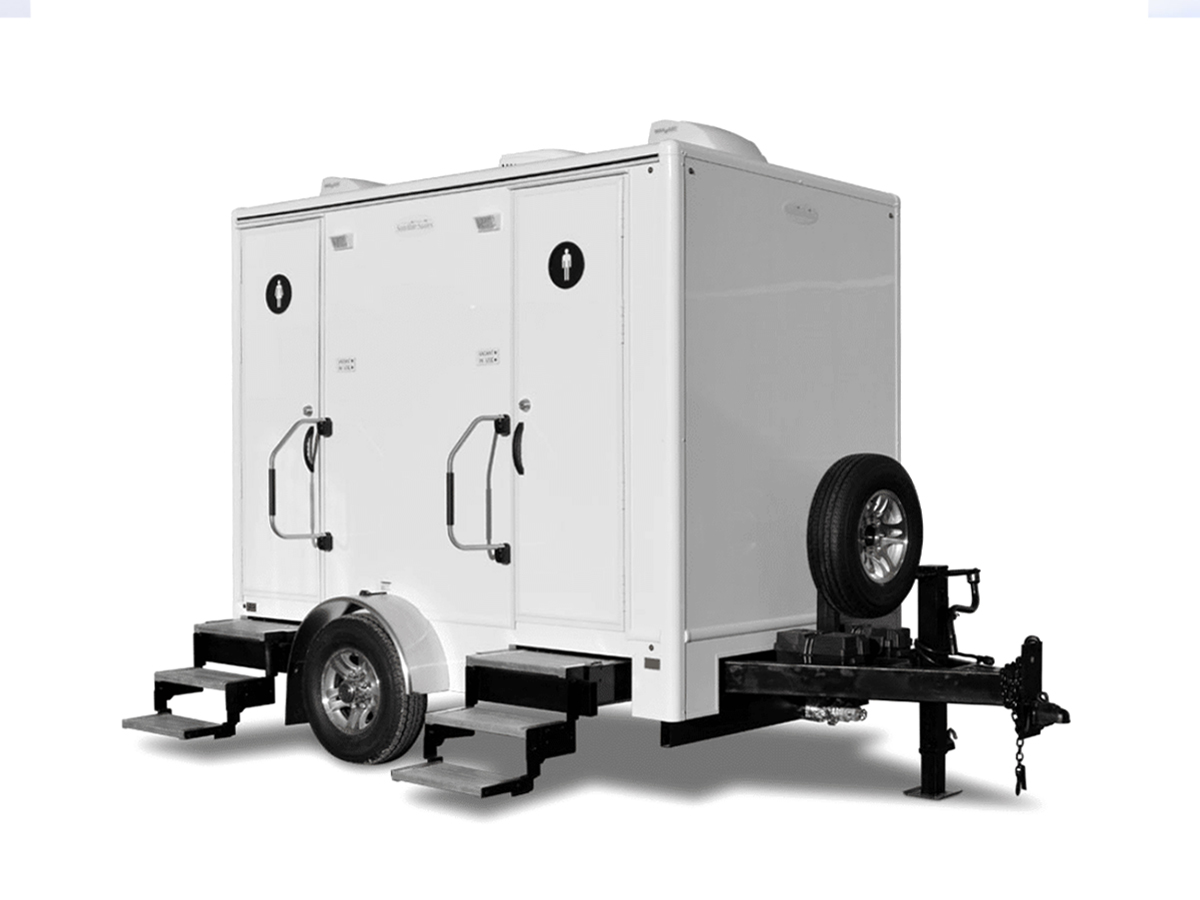
Frequently Asked Questions
Do I really need a restroom trailer for my construction site?
For most small jobsites — under 10 workers, short duration — standard porta-potties are the right fit. A trailer makes sense when your project is long-term, has a crew of 15 or more, runs multi-shift, is client-facing, or is in a remote location. If your project hits any of those, the trailer is often the better solution.v
Is a restroom trailer harder to set up than a porta-potty?
Not for you — we handle placement, setup, hookups, and servicing. The trailer does need level ground, vehicle access for our tow vehicle, and typically a 110V power source. Most active jobsites can stage all three with some planning during mobilization.
Is a restroom trailer worth the cost?
For the right projects, yes. Restroom trailers cost more upfront than standard units, but they often reduce the overall number of units needed, cut down on crew complaints and downtime, and improve site conditions for supervisors and visitors. On long-duration or high-visibility projects, the math typically favors the trailer.
How many workers does a restroom trailer support?
It depends on the trailer’s stall count. A standard multi-stall construction trailer typically supports a crew of 15–30 comfortably. Larger crews may need multiple trailers or a mix of trailers and standard units. Call us with your crew size and we’ll recommend the right setup.
Do construction restroom trailers count toward OSHA toilet requirements?
Yes. Restroom trailers count toward OSHA 1926.51 requirements the same way standard porta-potties do, and the multi-stall design often means a single trailer covers a larger crew than several individual units. We can help you calculate the right unit mix for compliance.
What kind of site access does a restroom trailer need?
Level ground for placement, room for our tow vehicle to maneuver the trailer into and out of position, and typically a 110V power outlet or generator for climate control and lighting. Some trailers are self-contained for water; others need a fresh water connection. Tell us about your site when you book and we’ll confirm what your specific setup needs.
How long can I rent a construction restroom trailer?
As long as your project needs it. We have customers with trailers on site for multi-year commercial builds and others who rent them for shorter high-profile phases of a project. Billing runs on 28-day cycles until you ask us to pick up.
How It Works
Step 1: Contact Us
Reach out and let’s talk about your project needs. We promise not to talk crap.
Step 2: Choose Your Units
Pick the porta-potties that suit your site. From basic to deluxe, we’ve got the loo for you.
Step 3: Schedule Delivery
We’ll drop the units at your site, and we won’t leave you in the lurch.
Step 4: Enjoy Hassle-Free Service
We handle all the maintenance, so you can focus on the big jobs, not the dirty ones.
Step 5: Easy Pickup
When you’re done, we’ll swoop in and take them away. No mess, no fuss.Tell us about your event or job site and we’ll send a fast, accurate quote with the right options for your needs.