
Handicap and Wheelchair Accessible Porta Potty Rental
We run two different accessible units, and the difference between them is the thing most people get wrong when they order. One is wheelchair accessible. One is ADA compliant. They are not two names for the same product, and if your permit specifies one, the other will not do.
Here is how to tell which you need, with the measurements, so you can check rather than take our word for it.
Which one do you need?
If your permit, contract or venue agreement uses the words “ADA compliant”, you need the Freedom. Give us notice when you book and we will make sure one is on the truck for your date.
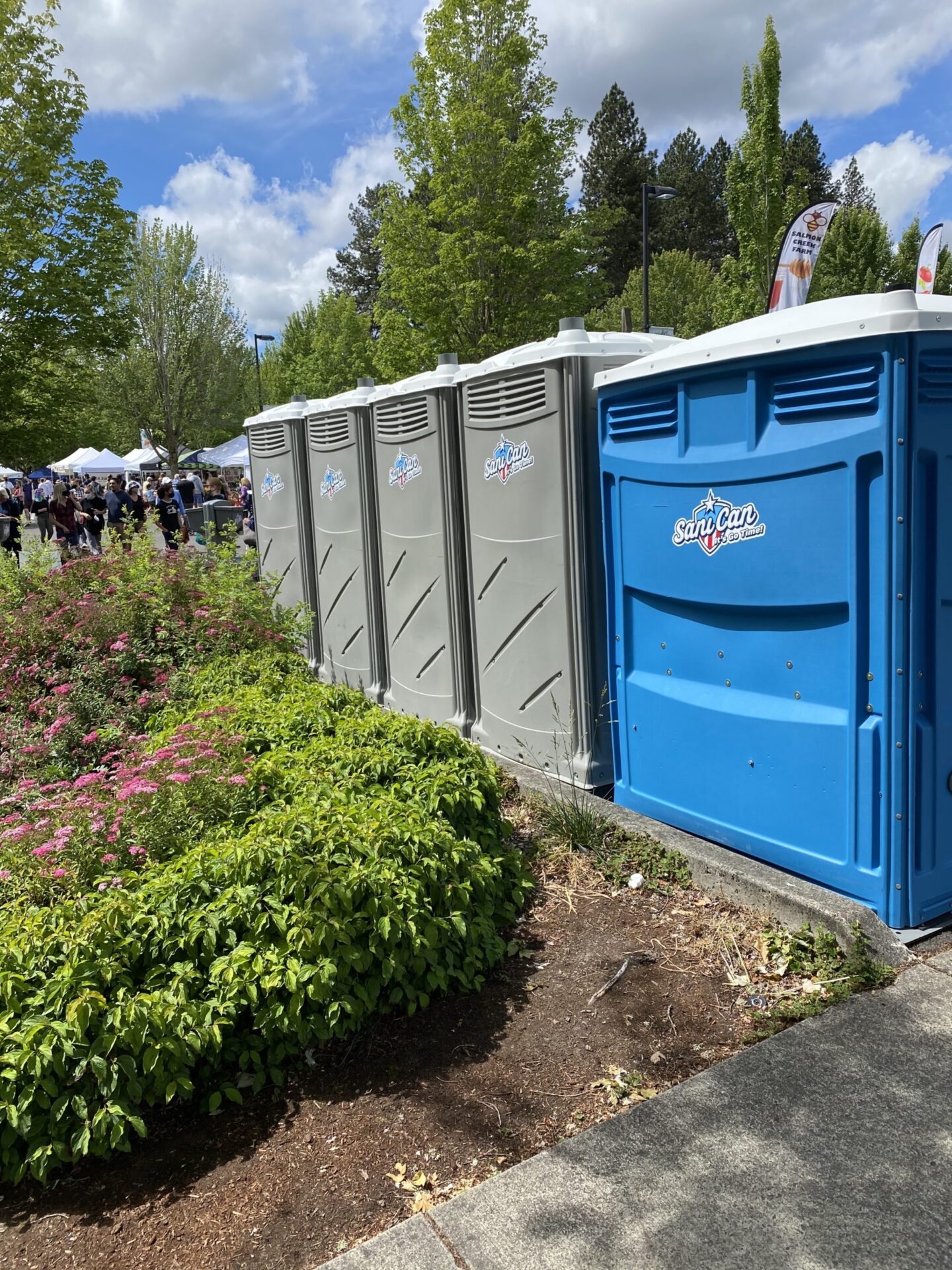
If it asks for a wheelchair accessible, handicap accessible or disabled access restroom, either unit qualifies, and the Liberty is usually the better fit. It is two feet shallower, which matters more than people expect on a tight site or a crowded event footprint.
If nothing in your paperwork mentions accessibility at all, you are probably still better off with one. Most public events in Oregon and Washington require at least one accessible restroom, and it is a cheaper decision to make now than to fix on the morning of the event.
The Liberty — wheelchair accessible
This is the unit we move most often, and for the majority of events and job sites it is the right one.
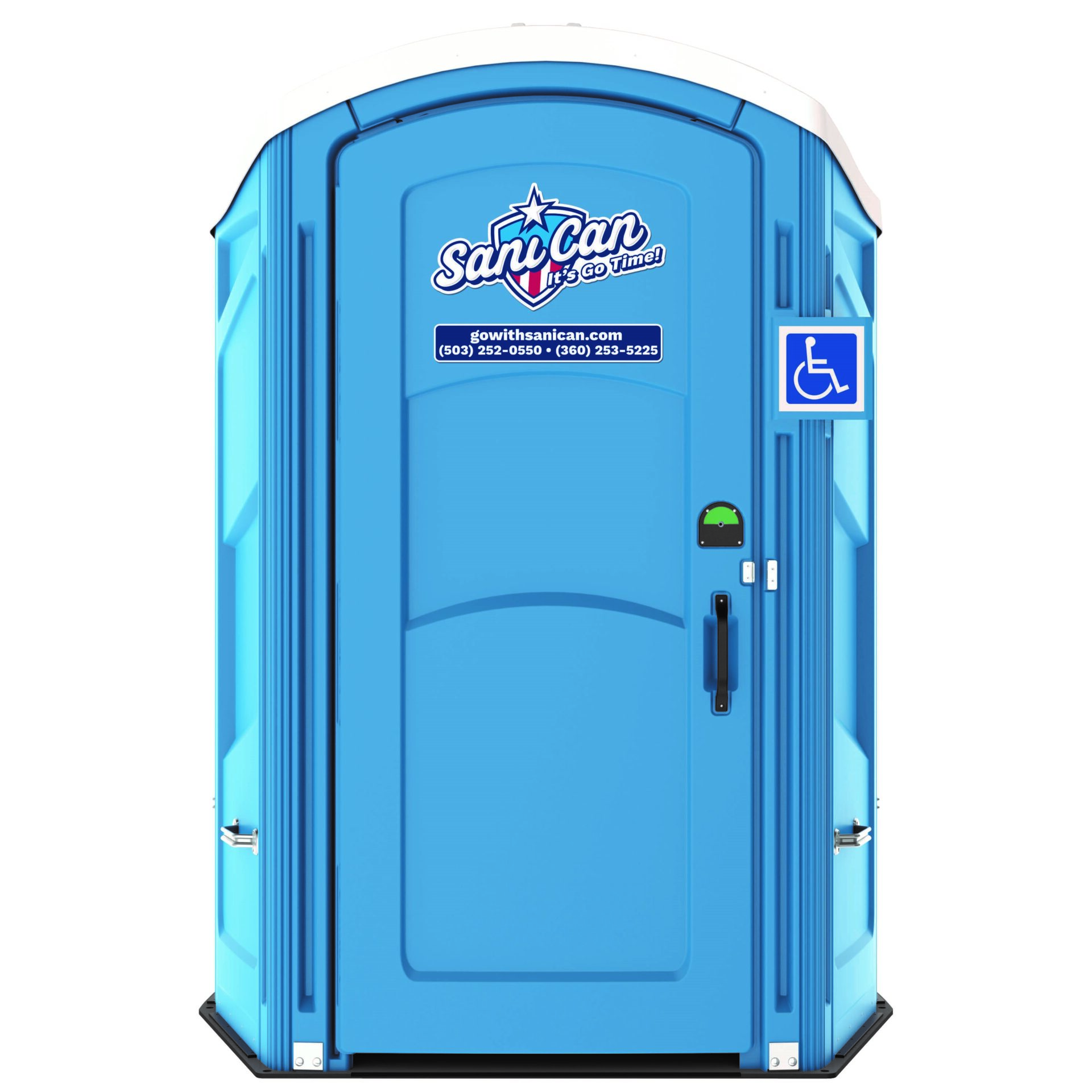
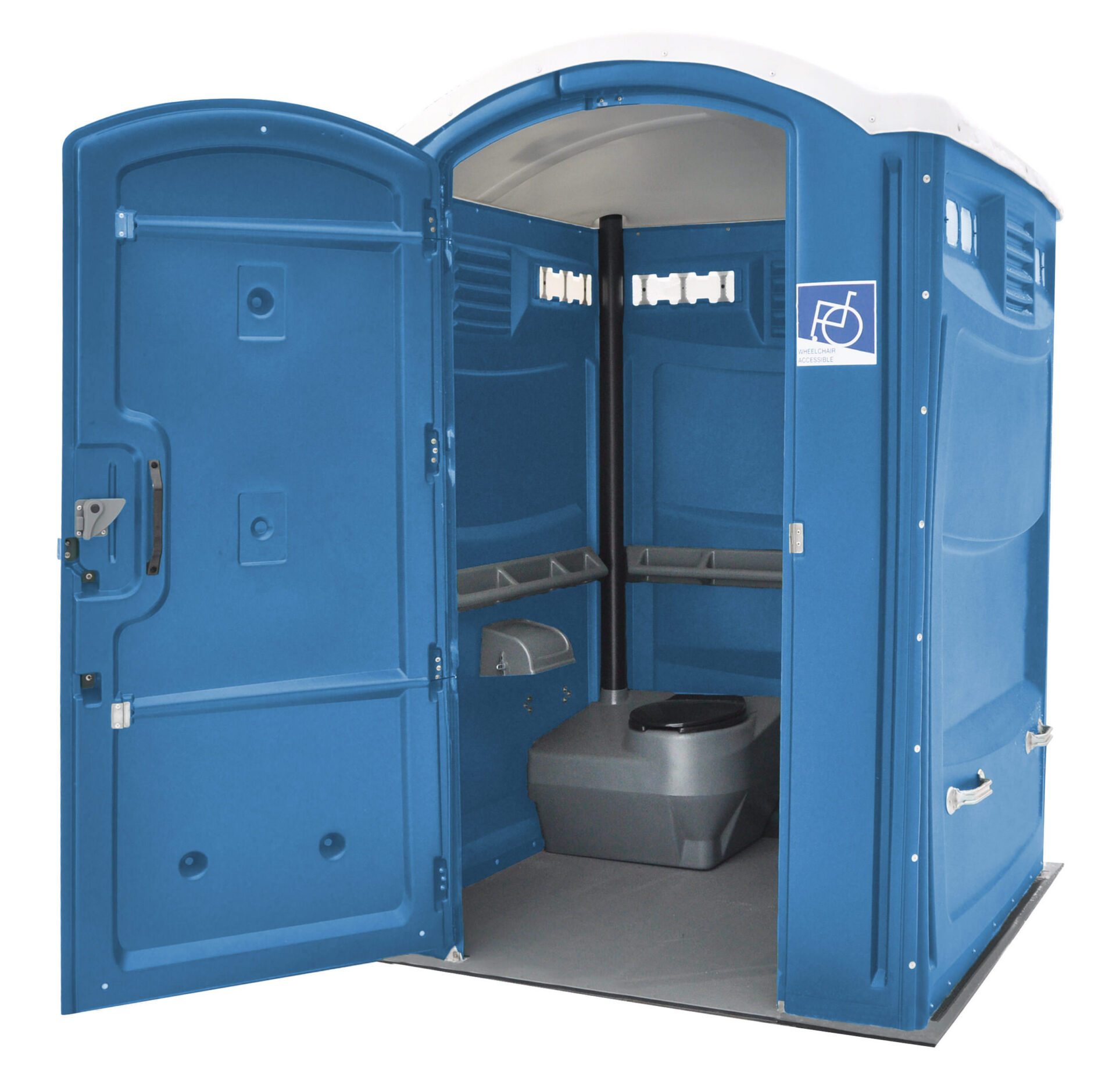
It is noticeably roomier than a standard restroom, with ground-level entry and no step, anti-slip flooring, and a door wide enough to take a wheelchair without a fight. Inside there is room for a three-point turn.
| Liberty | |
|---|---|
| Exterior, height by width by depth | 91" x 62" x 62" |
| Floor area | 3,364 sq in |
| Door width, fully open | 37.2" |
| Door opening height | 80.8" |
| Seat height | 18.5" |
| Waste tank, as we stock it | 68 gallons |
| Weight | 250 lbs |
Satellite Industries, who build it, describe the Liberty as an alternative to a full ADA compliant restroom. That is the manufacturer’s own wording and it is the clearest statement of what this unit is: a genuinely accessible restroom that does not claim compliance with a federal standard.
The Freedom — ADA compliant
This is the unit to book when the paperwork is specific.
Satellite sell the Freedom as a fully ADA compliant restroom. It is substantially deeper than the Liberty, and that depth is what the compliance rests on.
| Freedom | |
|---|---|
| Exterior, height by width by depth | 90.5" x 66" x 86.5" |
| Floor area | 4,138 sq in |
| Door width, fully open | 32.7" |
| Door opening height | 80.8" |
| Seat height | 18.5" |
| Waste tank, as we stock it | 68 gallons |
| Weight | 310 lbs |
ADA compliant units are available with notice rather than off the shelf. Demand for them is genuinely occasional in this market, so we do not keep a large number standing by. Tell us when you book, not on the day, and you will have one.
The thing almost everybody gets wrong
A wider door is not what makes a restroom ADA compliant. On our own fleet, the wheelchair accessible unit has the wider door of the two: 37.2 inches against the compliant unit’s 32.7.
Compliance is about the floor, not the doorway. The 2010 ADA Standards require room for a 60-inch turning circle inside the unit, and that circle needs roughly 2,827 square inches of clear floor before you subtract the bench and the urinal. The Liberty’s 3,364 square inches cannot hold it once the fittings are in. The Freedom’s 4,138 can.
The two units are almost the same width. The difference is depth, 62 inches against 86.5. An ADA compliant restroom is not a wider box. It is a deeper one.
That is the whole distinction in one measurement, and it is worth checking against the manufacturer’s own figures rather than anyone’s marketing.
How many accessible units do you need?
At least 5% of your total restroom count, with a minimum of one. In practice that is one accessible unit for every twenty standard units.
Your permit or venue agreement may ask for more than the minimum, so read it before you order rather than after. For a small event or a single job site, one unit alongside your standard restrooms is normally the whole answer.
Where it has to go
A compliant unit in a place a wheelchair cannot reach is not an accessible restroom, and this is the part that most often goes wrong on the day.
Firm, level, slip-resistant ground. A route to it at least 36 inches wide, free of steps and curbs. No further from the action than the standard units, because putting the accessible restroom in the far corner of the lot defeats the point.
One practical note for an Oregon winter: the Freedom is 60 pounds heavier than the Liberty. On soft or saturated ground, firm footing matters more rather than less.
Service
Accessible units go on the same schedule as the rest of the fleet. Pumped, cleaned, sanitized and restocked, weekly as standard and more often on high-use sites.
Both units run 68-gallon waste tanks across our fleet, which is roughly double the base specification these models ship with. That is more capacity between service visits, and it matters most exactly where servicing is hardest: remote sites, multi-day events and high-traffic crews.

Frequently Asked Questions
Is a handicap porta potty the same as an ADA porta potty?
Not necessarily, and the words are used loosely across the industry. “Handicap accessible” and “wheelchair accessible” are descriptive terms with no regulatory definition behind them. “ADA compliant” means the unit meets the measurable requirements of the 2010 ADA Standards for Accessible Design. Every ADA compliant unit is wheelchair accessible. The reverse is not true.
Which unit do I get if I just ask for an accessible porta potty?
The Liberty, our wheelchair accessible unit, unless you tell us otherwise. It suits the large majority of events and job sites. If your permit or contract specifies ADA compliance, say so when you book and we will supply the Freedom instead.
Do I need to give notice for an ADA compliant unit?
Yes, please. ADA compliant units are available with notice rather than held in quantity. Booking ahead rather than on the day is the difference between having one and not.
How many accessible units do I need for my event?
At least 5% of your total restroom count, minimum one, which works out at one per twenty standard units. Check your permit or venue agreement, which may require more.
Does my construction site need an accessible restroom?
Restrooms used only by crew fall under worker sanitation rules rather than the public-accommodation rules that apply to events. If any part of the site is open to the public, or a worker needs an accessible restroom, that changes. Public works projects routinely specify accessibility. Tell us about the project and we will work it out with you.
Can anyone use an accessible porta potty?
Yes. They are larger and easier to get into, but they work like any other restroom. Plenty of customers appreciate the extra room without having a specific accessibility need.
My permit says ADA compliant. Will a wheelchair accessible unit do?
No. If the wording specifies ADA compliance, book an ADA compliant unit. The terms are not interchangeable, and this is the single most common reason an order has to be corrected late.
Want the full explanation?
Our guide to wheelchair accessible vs ADA compliant portable restrooms goes through the distinction in detail, including what to look for in permit wording and what happens when a building’s own accessible restroom goes out of service.
How It Works
Step 1: Contact Us
Reach out and let’s talk about your project needs. We promise not to talk crap.
Step 2: Choose Your Units
Pick the porta-potties that suit your site. From basic to deluxe, we’ve got the loo for you.
Step 3: Schedule Delivery
We’ll drop the units at your site, and we won’t leave you in the lurch.
Step 4: Enjoy Hassle-Free Service
We handle all the maintenance, so you can focus on the big jobs, not the dirty ones.
Step 5: Easy Pickup
When you’re done, we’ll swoop in and take them away. No mess, no fuss.Tell us about your event or job site and we’ll send a fast, accurate quote with the right options for your needs.