
We get asked all the time, what’s the difference between a wheelchair-accessible portable toilet and a standard portable toilet? Then there’s the difference between a wheelchair-accessible unit and an ADA-compliant toilet rental. So many terms! Let’s break them all down so you know the difference and what you need to get, and when.
Standard Portable Toilets
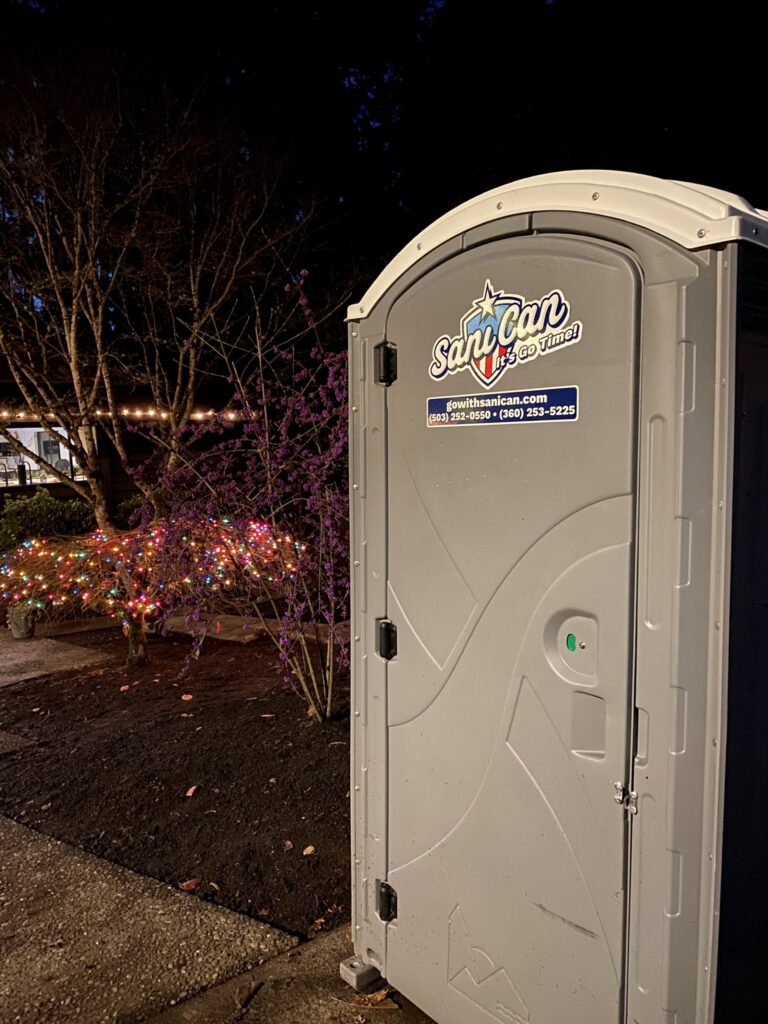
A standard portable toilet, porta-potty, porta-john is just what you think. The big blue plastic box (and in our case, sometimes, gray) is a self-contained restroom. The standard porta-potty rental comes with a toilet, urinal, toilet paper dispenser, and hand sanitizer. On average, a standard portable toilet has a width of about 43-46 inches, a depth of 46-48 inches, and a height of 88-91 inches. These units are great for construction sites, home renovations, concerts, and outdoor gatherings. In addition, the smaller holding tanks make them ideal for short-term events.
Handicap / Wheelchair Accessible Portable Toilets
Wheelchair accessible (or handicap-accessible) porta-potties are more spacious than standard porta-potties. They are designed to comfortably accommodate a wheelchair and other features that allow people with physical disabilities to use the restroom. Some of the features you will notice on a wheelchair-accessible unit are the more oversized doors designed to accommodate the entry and exit of a wheelchair. Worth knowing, because it catches people out: a wider door is not what makes a unit ADA-compliant. On our own fleet the wheelchair-accessible unit has the wider door of the two, at 37.2 inches against 32.7. Compliance is about the floor space inside, not the doorway. These units also have enough interior space to allow users to perform a three-point turn. Additional safety features include handrails, lower toilet seats, and anti-slip materials. Wheelchair-accessible portable restrooms are great for any event, large or small, where people with mobility issues may be in attendance. Some municipalities may legally require a certain number of wheelchair-accessible units per event, so check with the venue ahead of time or call us if you’re in our area, and we can help you figure that out.
ADA-Compliant Portable Toilets: What the Standard Actually Requires
We’ve talked before about the difference between ADA-compliant portable toilets and wheelchair-accessible toilets. One of the key differences is the ability to do a 360-degree turn in a wheelchair in an ADA-compliant toilet instead of only a three-point turn in a wheelchair-accessible unit. Another significant difference is the doors on ADA units must be designed for unassisted opening and closing, usually using a magnetic or hinged door mechanism. These units are always labeled with a blue wheelchair sign and must meet ADA requirements. More information on ADA requirements can be found the 2010 ADA Standards for Accessible Design.
ADA-compliant and wheelchair-accessible are not two names for the same thing, and the difference is floor space rather than door width. An ADA-compliant unit has to hold a 60-inch turning circle, which is what the 2010 ADA Standards require, and that space comes out of depth. The compliant units we run are about 86 inches deep; a wheelchair-accessible unit is about 62, at a similar width. That is nearly two extra feet of floor in the same footprint width.
A wheelchair-accessible unit is roomier than a standard porta-potty and suits most events. An ADA-compliant unit is what you need when a permit or a venue agreement specifies compliance in writing. Both want flat, firm ground away from curbs and steps, and the compliant unit is the heavier of the two, so footing matters more rather than less on a wet Oregon site.
If your paperwork says ADA, check it before you order and give us some notice, so we can be sure one is on the truck for your date. Our guide to wheelchair accessible vs ADA compliant portable restrooms goes through the distinction in full, including what to look for in permit wording.
And there you have it! Your quick guide to standard, wheelchair-accessible, and ADA-compliant porta potty rentals. If you are looking into renting one of these units for your next event, don’t forget to add hand-washing stations to keep things clean or holding tanks to increase the capacity of your units. As always, if you have any questions, you know how to find us!
We provide standard, ADA-compliant, and wheelchair-accessible portable restroom rentals to individuals and businesses throughout Portland and Salem, Oregon, and surrounding areas in Washington and Oregon. Contact us today to learn more about our different types of portable restroom rentals, or visit our portable restroom products page to learn more!