

We’re in the poop business, so we get it: people are embarrassed to ask us certain questions. But again — we’re in the poop business. Not much surprises us. Here are the questions we actually get, answered straight, by a company that services 3,500 portable restrooms every week across Portland, the Willamette Valley, and Southwest Washington. And remember: the only silly question is the one you didn’t ask.
Can you poop in a porta potty?
Yes. Portable restrooms are built to handle both number one and number two — so go on and, you know… go with the flow. The toilet doesn’t need to flush for you to go. Waste drops into a sealed holding tank beneath the seat, where the deodorizer solution starts breaking things down and controlling odor until our truck pumps the unit out.
How deep is a porta potty tank? Will it… fill up?
The holding tank sits directly beneath the seat, and a typical standard unit holds somewhere in the range of 50–70 gallons — which works out to a week or more of normal use for a small crew before it needs pumping. That’s exactly why every rental includes weekly service: the tank gets pumped before capacity is ever a question. High-traffic events get sized with more units or more frequent service so nobody’s unit gets anywhere close to full.
What’s the blue liquid in the bottom?
It’s a deodorizer solution. Years ago the industry used formaldehyde-based fluids; those have been phased out because wastewater treatment plants weren’t built to handle formaldehyde. We use a non-formaldehyde deodorizer — safer for the people using the unit and for the treatment plants where the waste ends up. It controls odor, helps break down waste and paper, and gives the tank that trademark blue.
Where does it all go?
Into a truck, then to a wastewater treatment plant — the same place your home toilet’s contents end up, just with a road trip in the middle. Our service trucks vacuum-pump the holding tank, and the waste is hauled to a licensed treatment facility. Across a year, American SaniCan pumps roughly 1.5 million gallons. It’s a real logistics operation; it just doesn’t smell like one from the outside, which is the point.
How often do porta potties get cleaned?
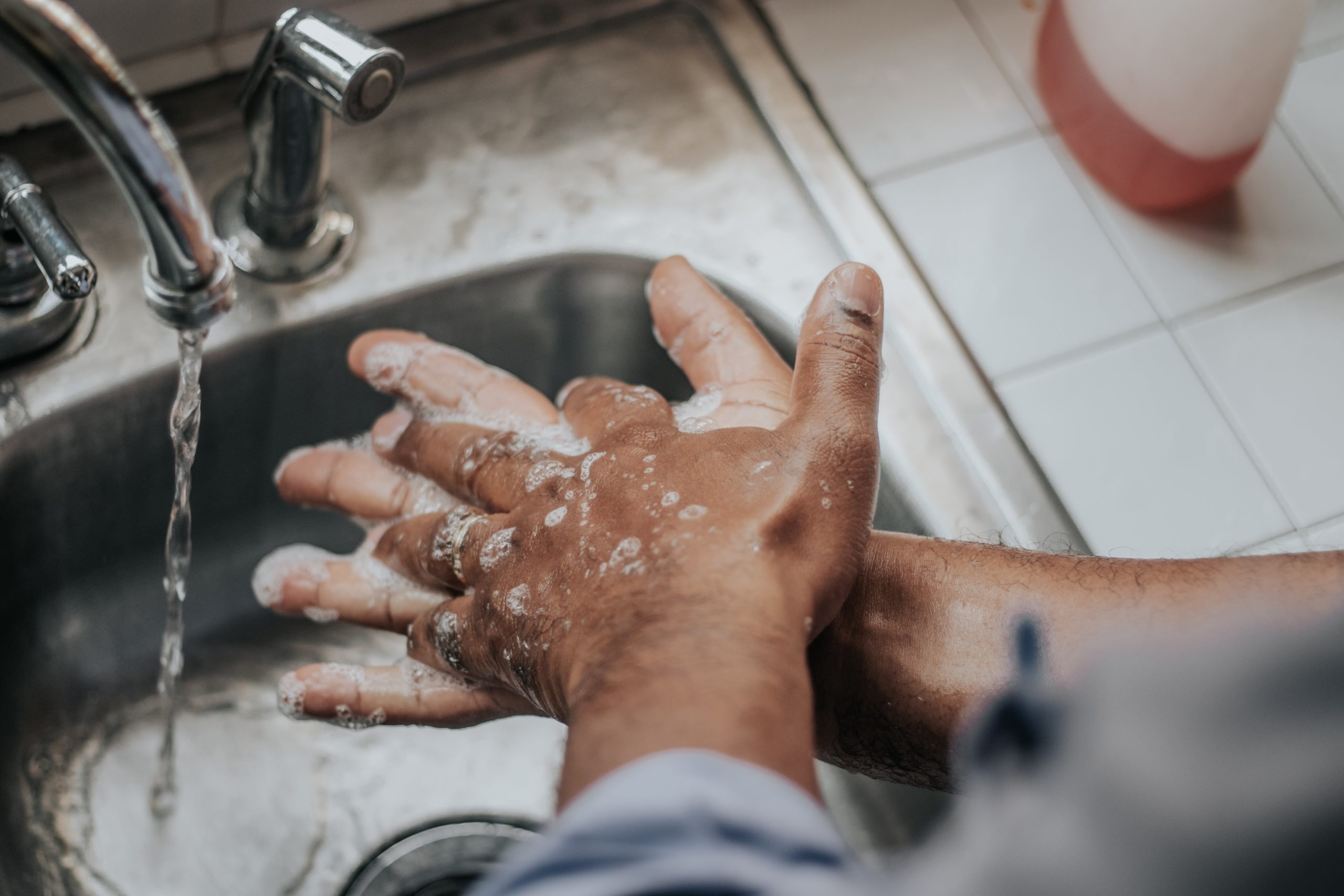
Every unit on a standard rental gets weekly service, and every visit is the same five steps: pump the tank, replenish toilet paper and hand sanitizer, wipe down and sanitize the unit, inspect it, and sign off. High-traffic jobsites and events schedule extra visits. If you’ve encountered a gross porta potty somewhere, that’s not a porta potty problem — that’s a service-schedule problem.
Are porta potties safe to use?
Generally, yes — with the same caveat as any shared restroom: wash or sanitize your hands. A serviced portable restroom is often cleaner than a busy public bathroom, because it gets a full pump-and-sanitize on a schedule rather than an occasional mop. Use the hand sanitizer (we stock it at every service), and you’re fine.
Do porta potties freeze in winter?
Not on our watch. When sustained temperatures fall below 30°F, we add an anti-freeze brine to the tanks so units keep working through Oregon and Washington winters. Routes run seven days a week, year-round — construction doesn’t stop for frost, and neither do we.
What happens if a unit gets tipped over?
It happens — wind, and occasionally people being people. We inspect the site for any ground leakage, pump and clean the unit, and either return it to service or swap in a fresh one. If you’ve got a tipped unit, call us; same-day or next-day response depending on the situation.
Can you put a porta potty in your backyard?
Absolutely — home renovations, backyard weddings, big family events. Units need firm, level ground and enough access for delivery. Same-day delivery is available on orders placed by 10 a.m., and weekend event rentals mean you’re not paying a month’s rate for a Saturday party. See our current pricing guide for what a weekend versus a month actually costs.
Still curious?
Like the classic children’s book says: everyone poops. There’s no shame in asking how we manage it — we’re proud of how well we do. If your question isn’t covered here, drop us a line or call (877) 806-7264. We’ve heard it all, and we’ll answer anything.